Behind Fading Echo #1 — Finding Your Way Without a Map
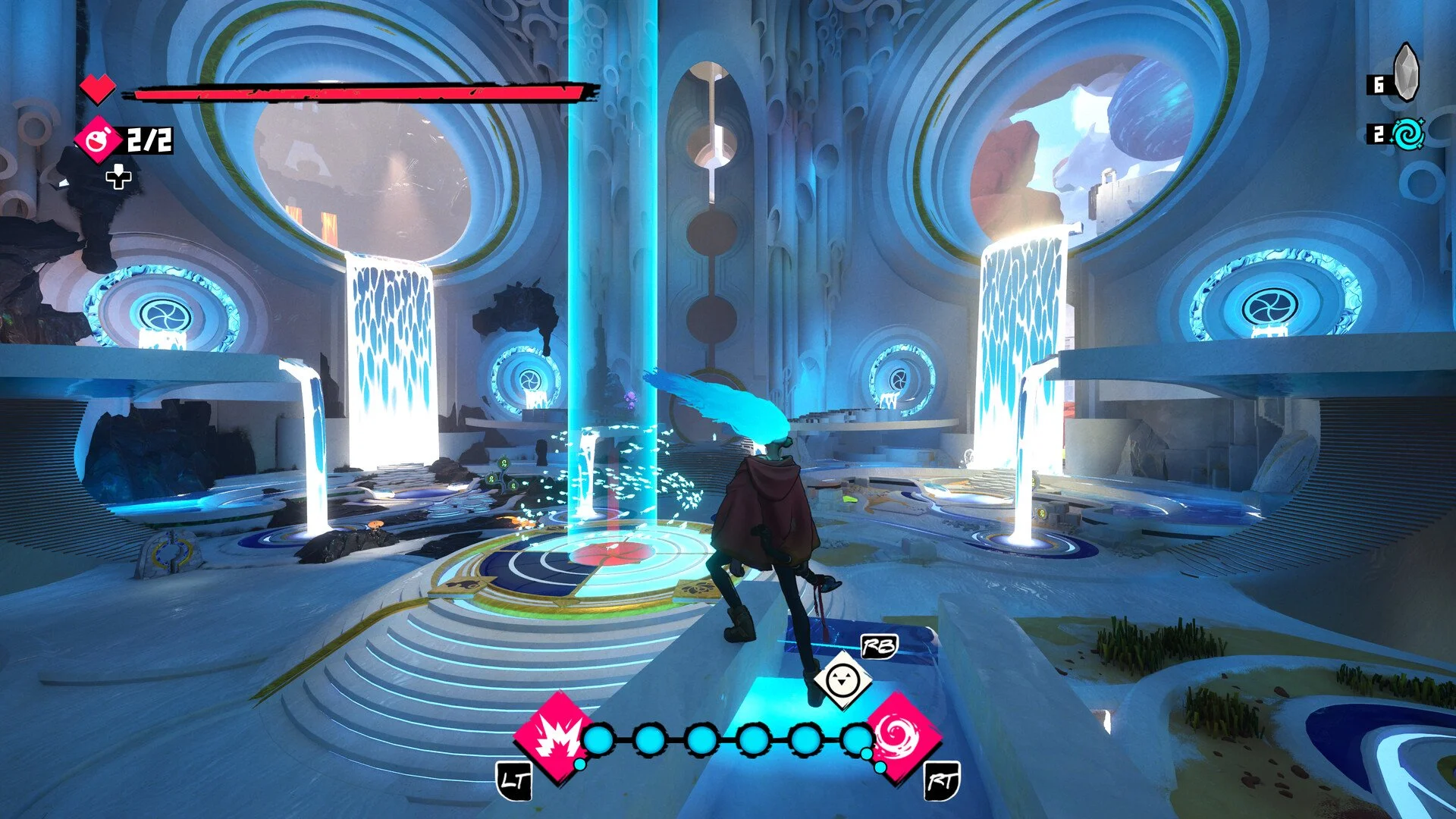
Fading Echo does not rely on a traditional map. That choice affects almost everything about how its spaces have to communicate with you.
Instead of opening a separate interface to understand where you are, we wanted landmarks, shortcuts, routes and traversal possibilities to become familiar through use. A strange silhouette in the distance can become a reference point. A route that initially feels confusing can become obvious after you have crossed it a few times. Eventually, the hope is that the environment itself starts doing some of the work a map normally would.
Learning a place rather than reading it
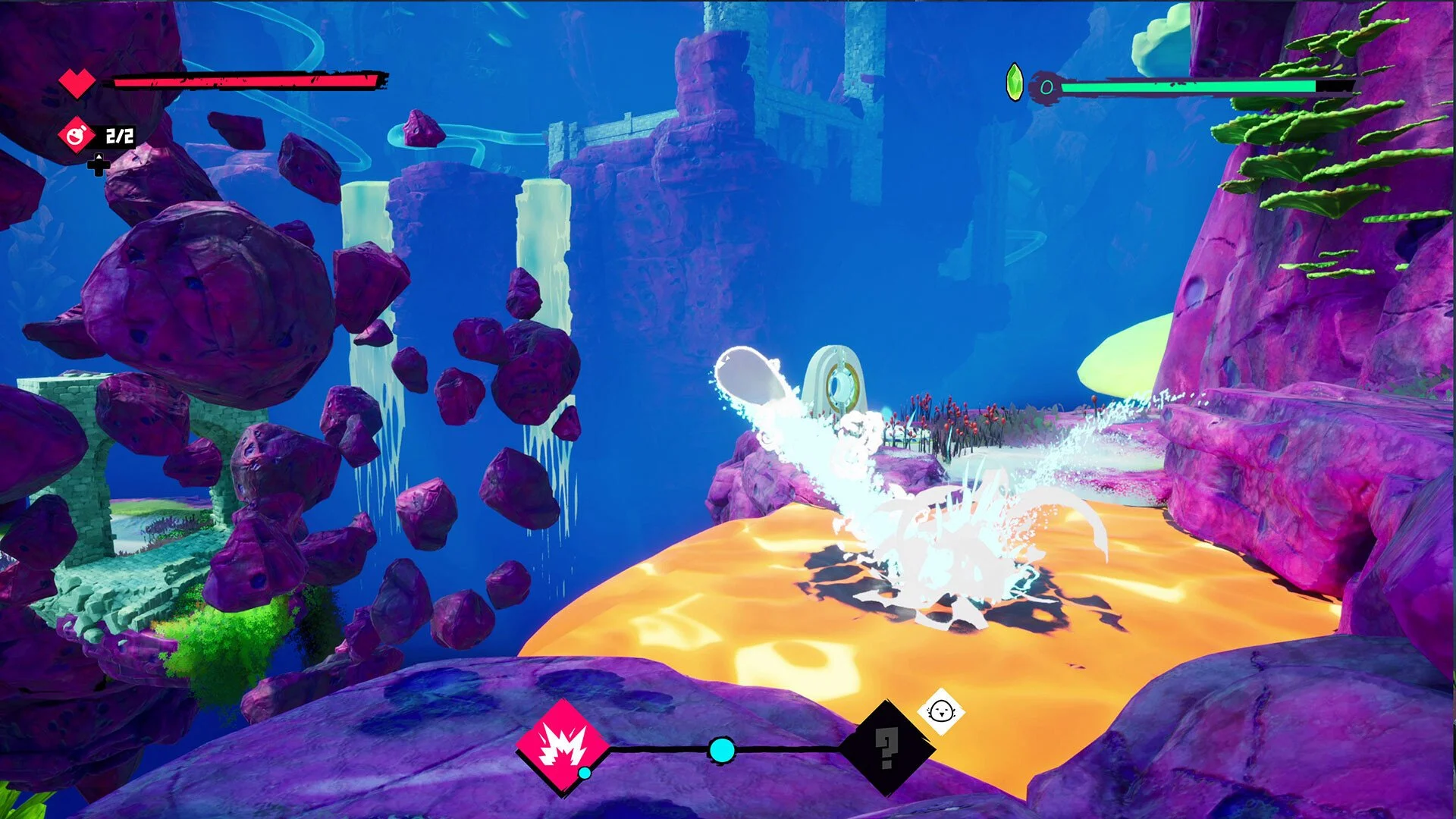
For us, exploration was never meant to be only the distance between two objective markers. We wanted the act of understanding a space to be part of play: recognizing landmarks, remembering a route, noticing something unusual in the distance, taking a wrong turn and occasionally discovering that the wrong turn was more interesting than the right one.
Part of that choice comes from the games we grew up with. Earlier console action-adventures often asked you to build a sense of place yourself: remember a landmark, recognize a route, get a little lost, and gradually turn an unfamiliar space into somewhere you understood.
Fading Echo is, in many ways, a small homage to that feeling. We wanted the world to ask for some of the same attention and memory, rather than immediately translating every destination into an icon or waypoint.
When that works, a place gradually becomes a map you carry in your head. You stop thinking consciously about navigation because the shortcuts, landmarks and traversal possibilities have become familiar. There is a small sense of ownership in that: you are not simply following instructions through the world, you have learned how it fits together.
Where exploration becomes disorientation
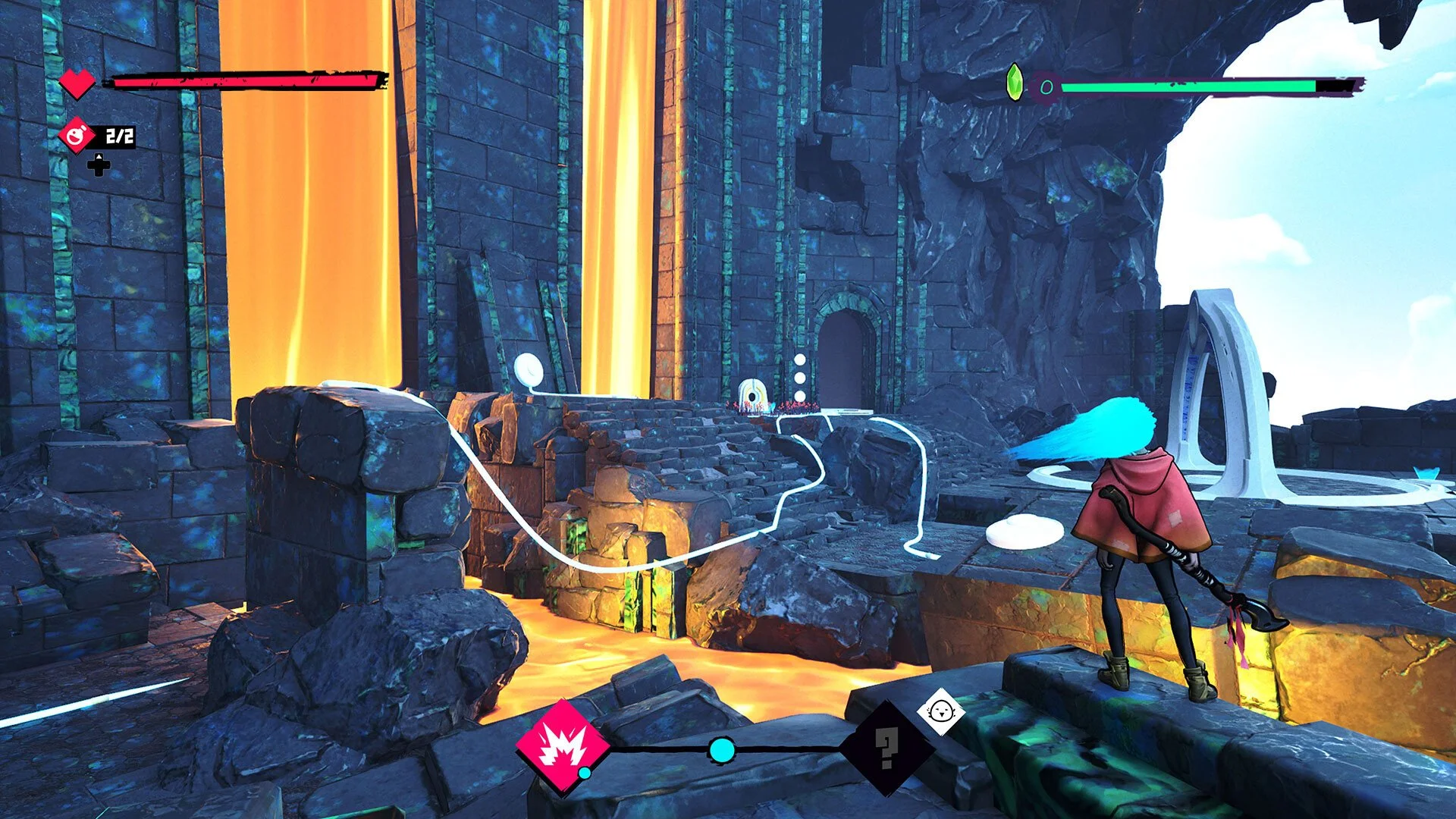
Of course, we are making that choice in a very different context. Players today are used to much clearer navigation tools, and for good reason. The interesting question for us was never simply “map or no map,” but how much guidance we could remove before discovery stopped feeling rewarding and started becoming frustration.
We have read feedback from players who felt lost, who had trouble distinguishing spaces, or who wanted stronger guidance. That experience is useful for us to hear. “It was intentional” is never a magic answer to frustration.
The real design challenge is deciding which friction creates the experience and which friction simply gets in its way. Asking players to pay attention, remember and experiment can make exploration more rewarding. Asking them to repeatedly circle the same space because the environment has failed to communicate is a very different thing.

What did you learn by heart?
If you have played Fading Echo, we would love to know which place you learned so well that you eventually stopped thinking about how to navigate it, and where the world failed to communicate clearly enough. Both answers tell us something useful about how the spaces are working.
Thank you for exploring them with us.