
Behind Fading Echo #3 - The Stories You Can Walk Past
Some of the stories in Fading Echo are designed around a slightly unusual possibility: you can ignore them.
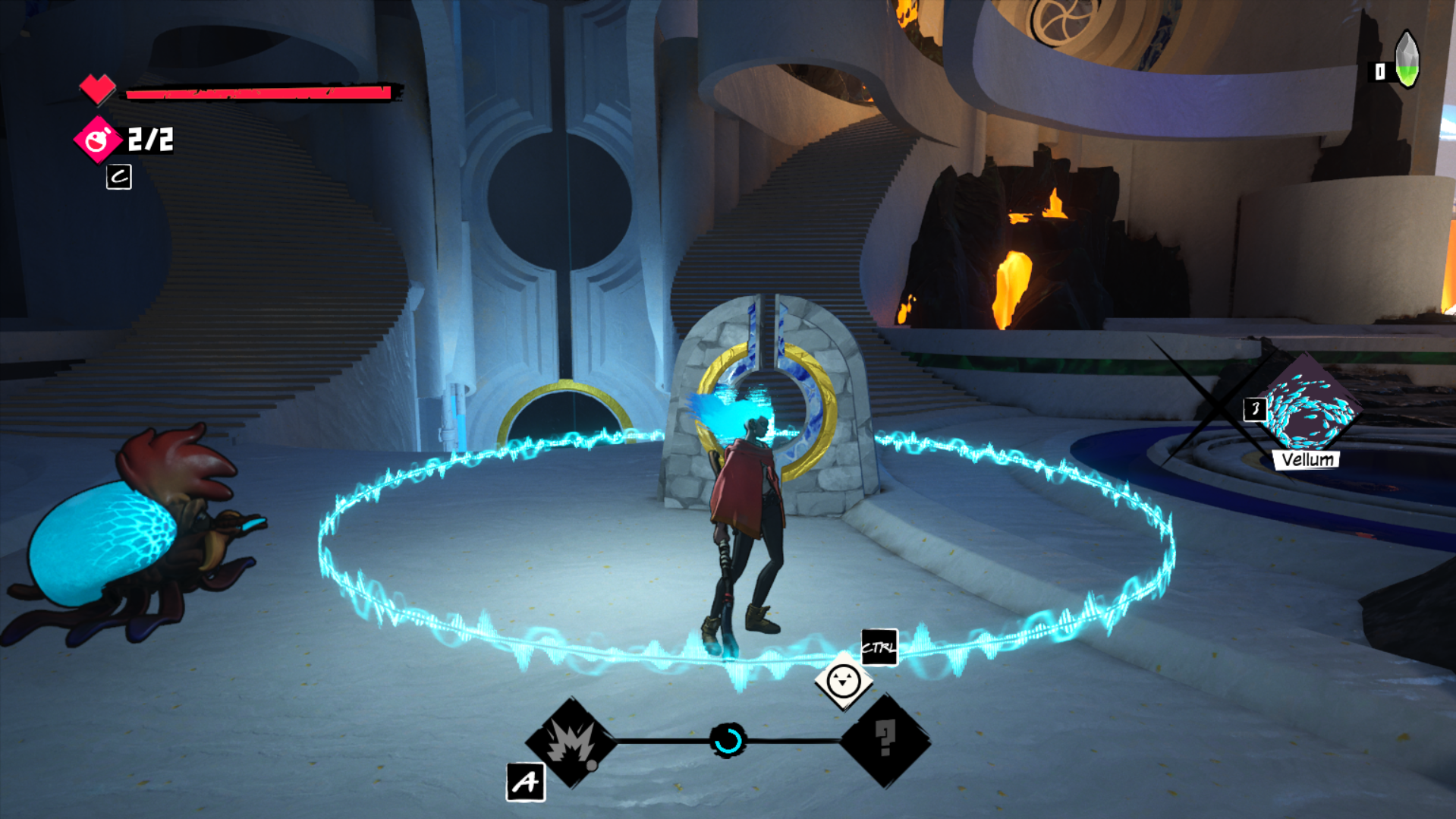
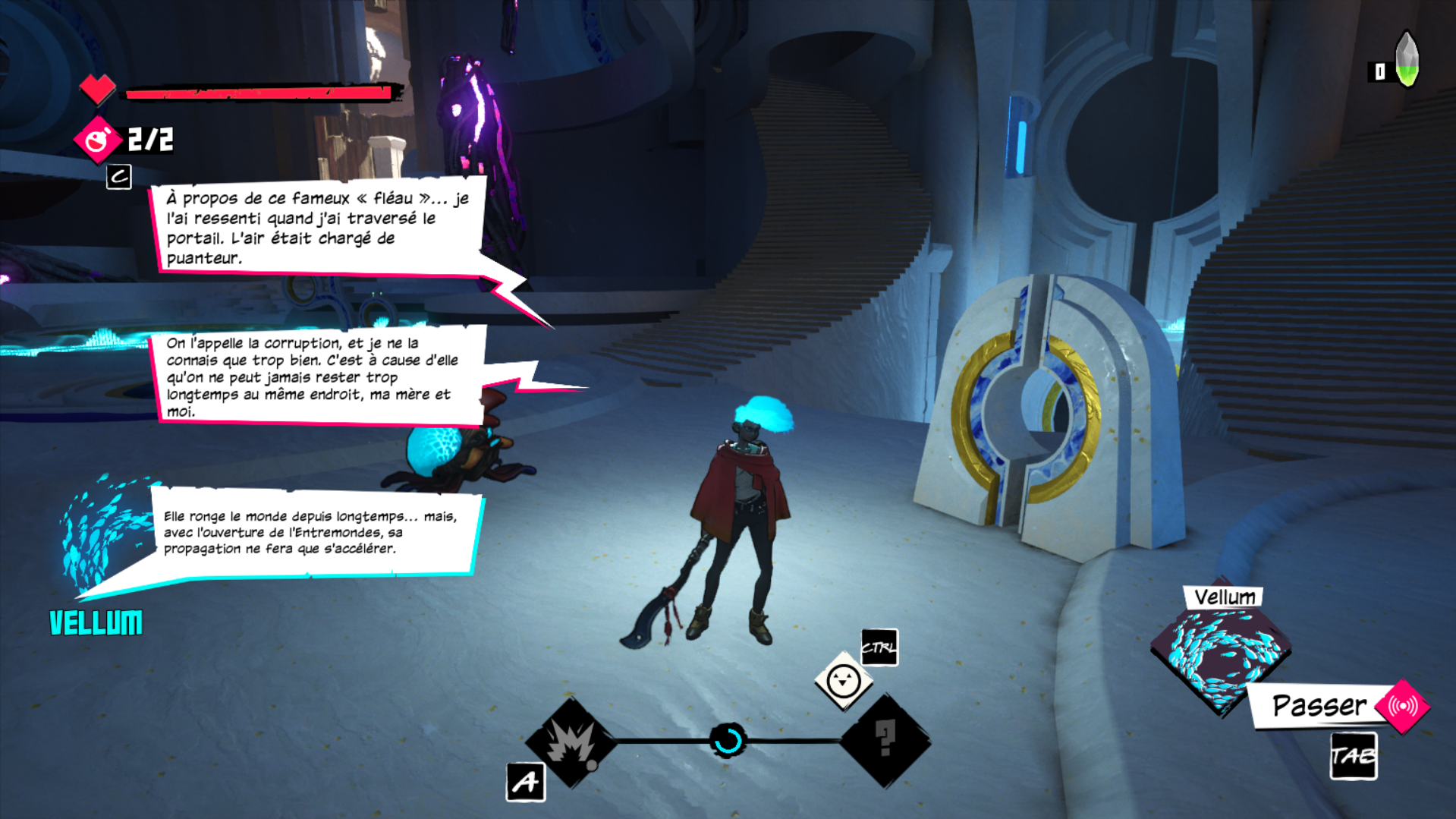
The Blue Rings are the clearest example and they come from the same philosophy that shapes exploration across Fading Echo: we want to give you a direction, without always deciding the path for you. The world is built to reward curiosity, experimentation and detours, letting you choose what catches your attention and how deeply you want to investigate it. We wanted parts of the narrative to work in the same way.
So a Blue Ring is an invitation rather than a checkpoint. There is narrative here and if you are interested, you can stop, listen and follow the thread. If you are not, you can keep moving.
Respecting the player’s right to keep moving
We have all had moments in games where we were completely invested in a story, and others where we really just wanted to keep moving. With the Blue Rings, we wanted to respect both moods.
Games are unusual storytelling machines because the audience is also busy doing something else. You may be navigating, fighting, experimenting, looking for a route or simply trying to get somewhere and that changes the way narrative has to coexist with the rest of the experience.
This is particularly important for Fading Echo. Much of the game is built around giving you room to experiment: choosing where to go, finding your own solutions and interacting with a world that responds to what you do. It felt strange to encourage that freedom everywhere else, then suddenly ask you to experience every piece of narrative in exactly the same way and at exactly the same pace.
We wanted parts of Fading Echo’s world and story to be available without making every player stop and follow them at the same rhythm. We like the idea that story can be something you explore too: something you choose to move toward, investigate and spend time with.
In a sense, that means accepting something slightly uncomfortable for anyone making narrative design: the player does not owe us their attention. If a story moment is optional, walking past it has to be a legitimate choice, not a mistake the game quietly punishes later.
Knowing when to take the wheel
Of course, not every story moment in Fading Echo works this way. There are moments when we want you to stop and controlling the pace becomes part of the storytelling. Cinematics allow us to control the general narrative framing and dramatic timing in ways that would be difficult or less effective while the player is moving freely through the world.
The important thing for us was not to make one approach the default solution for everything.
Cinematics, environmental storytelling, dialogue during gameplay and optional interactions such as the Blue Rings each give us different ways of telling the story. The question becomes: how much control does this particular moment need, and how much can we leave in the player’s hands? That balance matters even more in Fading Echo: it is a largely non-linear game, built by an indie team that has to be deliberate about where and how we focus our storytelling.
Optional does not mean consequence-free
Optional narrative sounds simple until you start deciding what can actually be optional. The main journey still needs enough information to make sense. Additional context needs to feel worthwhile when a player chooses to seek it out. Dialogue has to coexist with movement, exploration and combat. And if too much important context is hidden behind optional interactions, “player freedom” quickly becomes confusion.
We have seen a wide range of reactions to Fading Echo’s story: players who wanted to dig much deeper into the world, players who preferred to keep moving, and others who felt parts of the narrative could have been clearer or more concise. Those reactions expose the trade-off at the center of the system: how much story does the game need to deliver, and how much should the player be allowed to pull toward themselves?
We do not think there is one correct answer. For Fading Echo, we tried to create layers: the journey directly in front of you, contextual information around it, and additional narrative threads for players who want to follow them.
The aim is not to make the story less important. It is to let curiosity become one of the ways you interact with it.
That is a difficult balance to get right. Sometimes we nailed it; sometimes we missed the mark. Finding where to guide the player, where to step back, and how much context to provide without getting in the way is something we are still learning from.
